Barge-in and turn-taking: how conversational voice systems handle interruption
Why voice systems that understand words still fail at knowing when to stop talking.
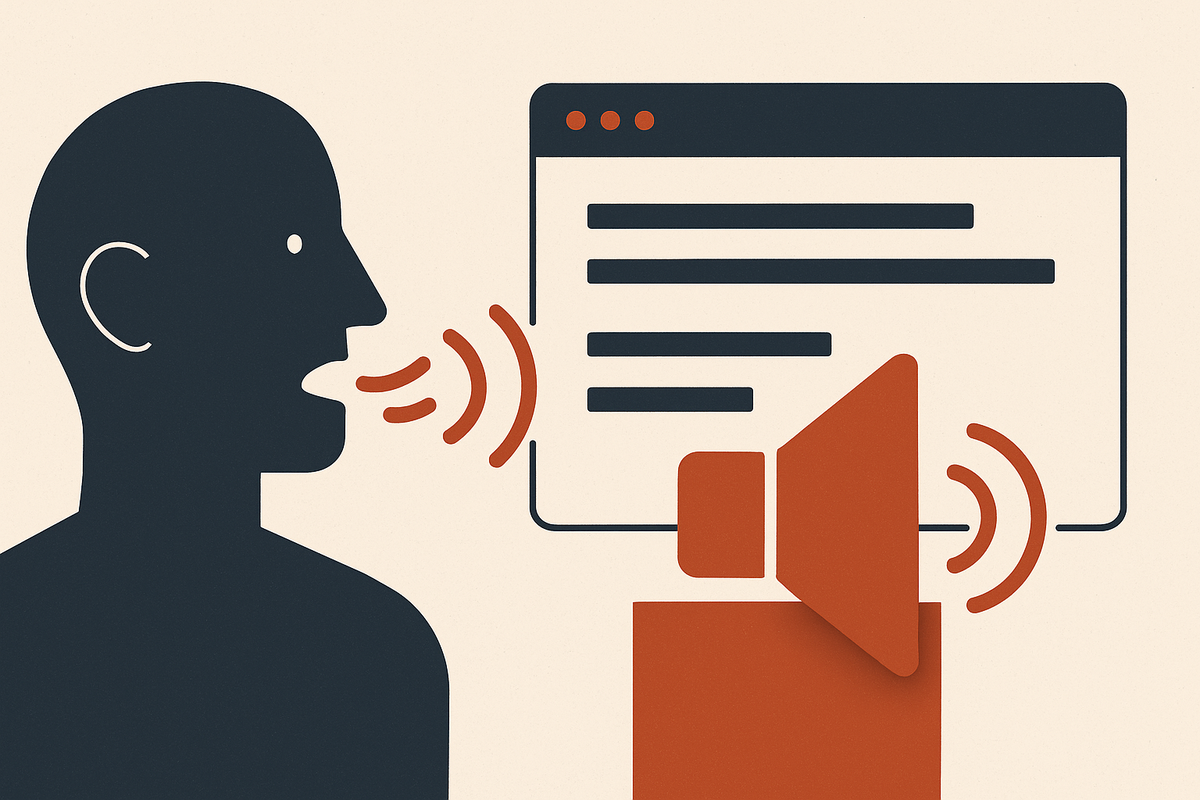
There's a version of this problem that sounds solved. Transcription accuracy on modern voice systems is genuinely impressive, sometimes startlingly so. But the moment you try to interrupt one of these systems mid-sentence, you discover that understanding words was never really the hard part. The hard part is knowing when to stop talking. That moment, what engineers call barge-in, is where most voice interfaces quietly collapse, and it's the reason so many technically sophisticated products still feel like arguing with a telephone tree.
What Barge-In Actually Means
Barge-in is the system's ability to detect that you've started speaking mid-response and immediately yield the floor. Simple in concept. Brutal to ship.
Think about what happens when a colleague starts talking over you. You don't stop based on a timer. You read intent, almost instantaneously, through intonation, through whether they're affirming or correcting you, through years of shared conversational context accumulated without any conscious effort. You decide in a fraction of a second whether to pause or push through, and you're almost never wrong. None of that decision-making is deliberate. It's pattern recognition that took a lifetime to accumulate.
A voice system has none of that. It's working from audio signal alone, in real time, with no second chances. Every conversation is, effectively, its first.
The Turn-Taking Problem, Up Close
Linguists have spent decades studying how humans negotiate conversational turns, and the findings are striking: across cultures and contexts, the rate of overlapping speech in natural dialogue is remarkably low. People are extraordinarily skilled at predicting when someone else is about to finish, reading falling intonation, syntactic completeness, a slight lengthening on the final syllable, even a particular kind of intake breath that signals the speaker is winding down.
Voice AI systems largely cannot read those cues with comparable fluency. Early systems punted on the problem entirely: wait for a silence of a defined duration, then respond. This works fine in a quiet room with a cooperative, unhurried user, which is to say, it works in almost no real deployment context.
The result is two failure modes anyone who has used one of these systems will recognize immediately. The system responds too early, cutting off the tail end of your request because you paused to collect your thoughts. Or it keeps talking well past the point where you've clearly tried to interrupt, because its barge-in threshold is too conservative and the output pipeline hasn't been told to stop yet. Both failures erode trust fast. After a few of them, users start speaking differently: slower, more deliberate, with an unnatural completeness that feels nothing like conversation. The system has trained its user to accommodate its limitations. That's not a minor UX problem. It is a fundamental inversion of what the product is supposed to do.
How Modern Systems Handle It, And Where They Still Come Up Short
The architecture underlying barge-in detection has changed substantially over the last several years. Older systems ran speech recognition and response generation in something close to sequential phases: you spoke, the system transcribed, it responded. Interrupting a pipeline designed like that was genuinely difficult, more afterthought than first-class design concern.
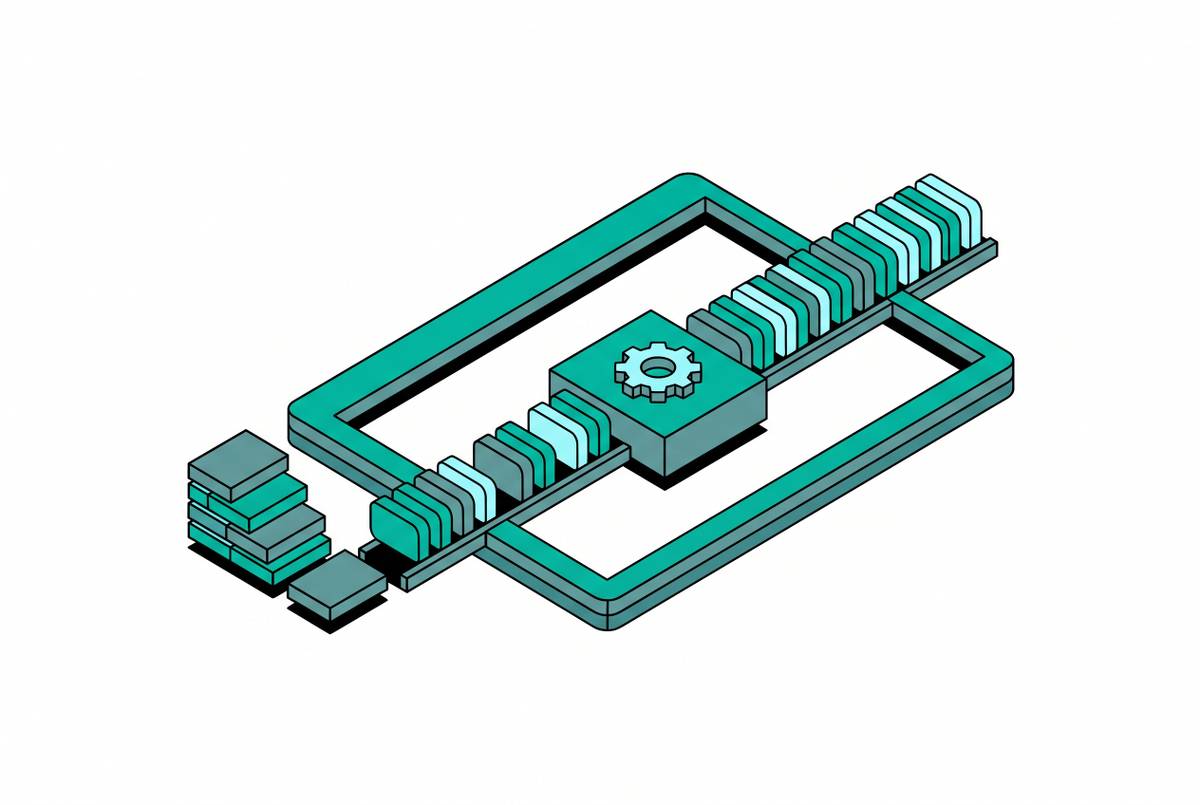
Contemporary systems increasingly run parallel processes. Response generation proceeds on one thread while an acoustic front end monitors the microphone continuously for new voice activity. When something registers, the system has to make a fast call: yield, or hold?
That decision is harder than it sounds, because nearly everything registers as potential voice activity. Background noise, a television in the adjacent room, the system's own audio reflecting off a nearby surface, all of it can trip a sensitive detection model. Too sensitive, and the system interrupts itself constantly. Too conservative, and users feel ignored. The calibration problem is not a technical detail. It is the core product experience.
The signal processing here combines voice activity detection, which distinguishes speech-like audio from ambient noise, with endpoint detection models that try to determine not just whether someone is speaking but whether they've completed a coherent thought. Endpoint detection is where the most serious recent investment has gone, because it's the hardest piece and the one most directly responsible for whether a conversation feels natural or adversarial.
Wake Words Change the Problem, But Don't Solve It
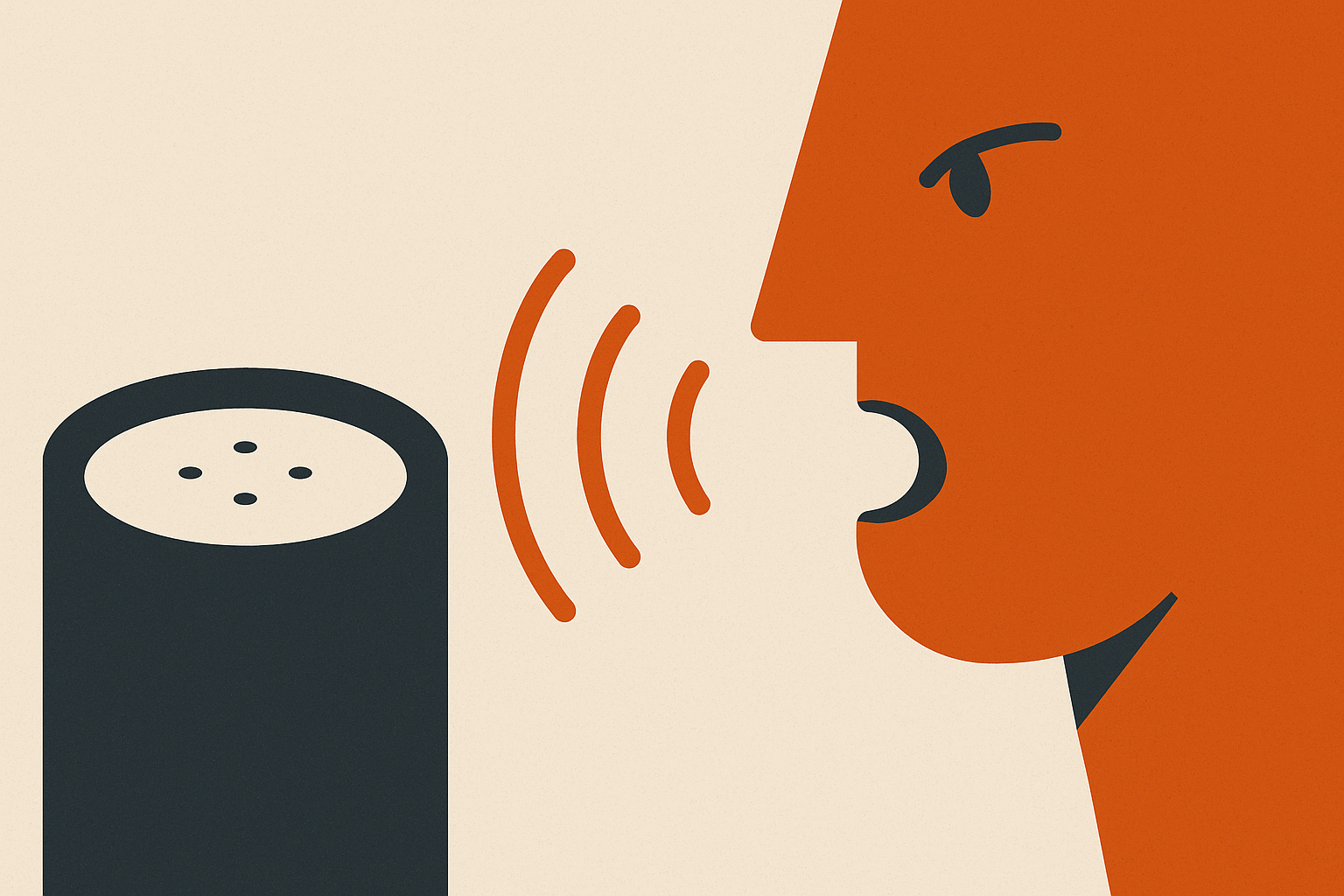
Many deployed voice systems add another structural layer: the wake word. Consumer smart speakers use this model. You invoke the device with a specific phrase before the conversational turn begins. The barge-in problem in this context is slightly more bounded. The system isn't trying to manage freeform conversational interruption; it expects a discrete invocation, a request, a response, done.
The failure mode shifts, though. It's not poor mid-conversation handling. It's poor detection of whether a new invocation has started while a prior response is still playing. Different problem, different solutions.
In continuous conversation architectures, the kind increasingly common in agent-based systems and phone-based deployments, that containment disappears entirely. The system must manage turn-taking across an open-ended dialogue with no structural anchors, inferring intent from an unstructured stream. The systems doing this well are noticeably more pleasant to use. It's not subtle. You feel it within thirty seconds.
Latency: The Invisible Degrader
Even when detection logic works correctly, the user experience can still feel like being talked over. Because between the moment you start speaking and the moment the system actually stops, there's a pipeline of operations that has to execute: voice activity detection, the yield decision, halting text-to-speech output, flushing the audio buffer, confirming microphone state, beginning transcription. Each step is fast. In aggregate, even a well-optimized implementation will have a perceptible lag.
That lag feels, socially, like being ignored. It produces the same friction as a system that never detected your interruption at all. The underlying detection was correct; the user experience was still broken.
Better hardware, edge processing instead of server round-trips, more disciplined audio pipeline design: these solve the latency problem. But latency is easy to defer when word-error rate looks good in benchmarks and the demo environment is quiet. Benchmarks don't capture what it feels like to try to interrupt something that keeps talking at you.
What Good Actually Looks Like
The voice systems that feel genuinely conversational share a cluster of observable traits. They stop quickly and cleanly when interrupted, without the slight hesitation that makes you wonder if your interruption even registered. They don't misfire on short affirmations, the "uh-huh" or "okay" that happens naturally mid-response and doesn't mean the user wants the floor back. When a false positive does occur and they stop prematurely, they recover without stalling, a brief acknowledgment rather than an awkward silence that puts the burden back on the user to figure out what just happened. And they adapt, at least within a session, to the acoustic conditions they're actually operating in.
None of this is technically exotic. But it is the standard users have internalized from human conversation, whether they can articulate it or not. The moment a voice system stops feeling like dialogue and starts feeling like a form you're completing with your voice, something in the turn-taking logic has broken down. Users notice. They don't always know why they stop using a product; they just know it felt like effort when it was supposed to feel effortless.
The teams getting this right are measuring success at the conversational level, not the utterance level. Not just whether words were recognized correctly, but whether the exchange felt like something a person would want to have again. That's harder to measure, which is probably why so many products have avoided measuring it.