Fallback and Error Recovery in Production Streaming TTS Systems
Streaming TTS failures demand tailored recovery patterns, not generic retries.
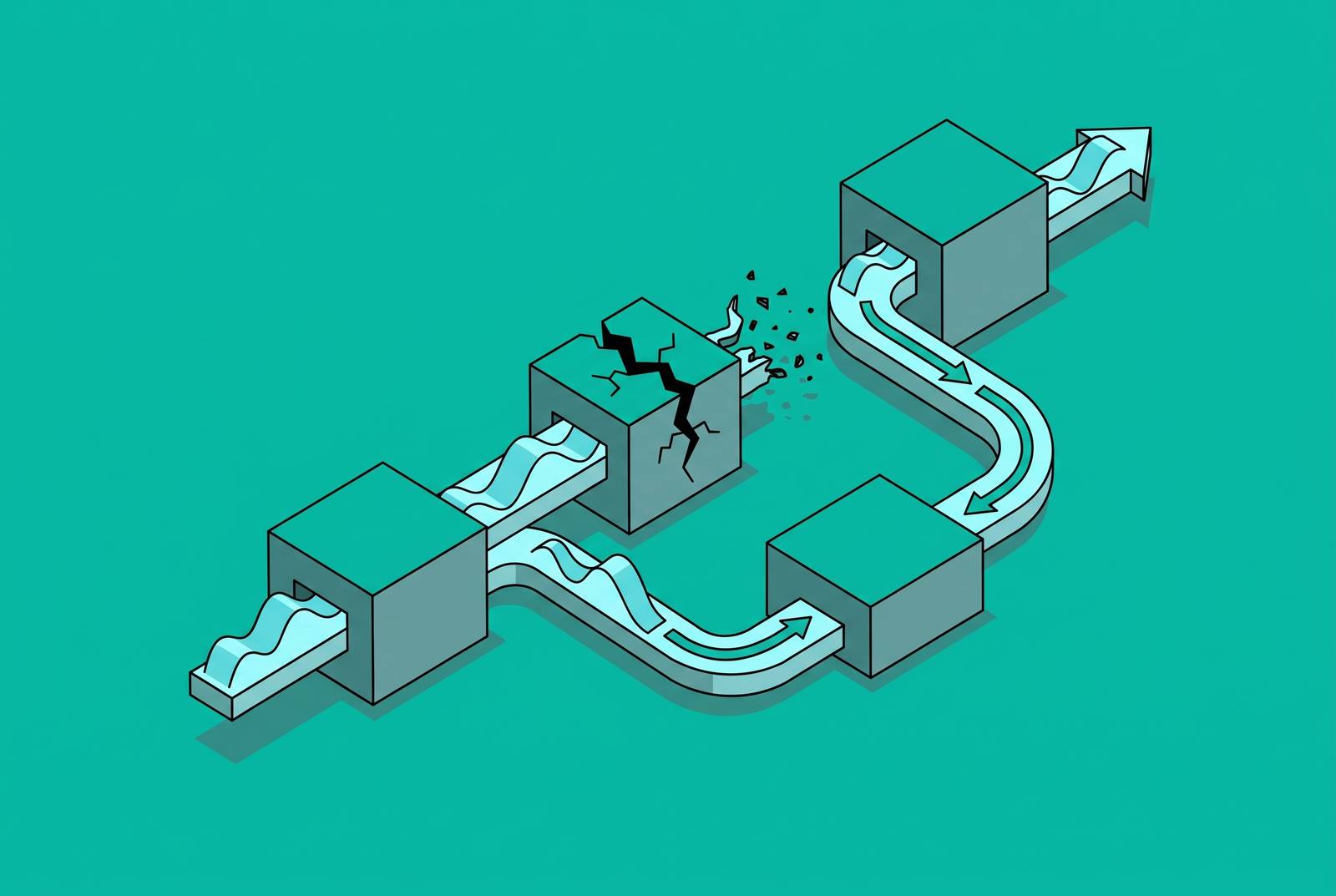
Streaming text-to-speech doesn't fail the way batch TTS fails. It fails mid-sentence, mid-connection, mid-buffer, in ways that never once showed up during testing, and the fix isn't "add more retries." The fix is matching a specific recovery pattern to a specific failure mode before a caller notices dead air, and most teams get this wrong before they even reach the fallback question, because they're still treating streaming TTS like batch TTS with a faster clock.
Nearly all the trouble starts with that one bad assumption. Teams relying on "retry the request" for fallback have missed the point: retries assume failures are temporary and isolated, but most issues here are neither. What sets streaming apart from the rest? It’s worth stating clearly, since the answer shapes everything that follows.
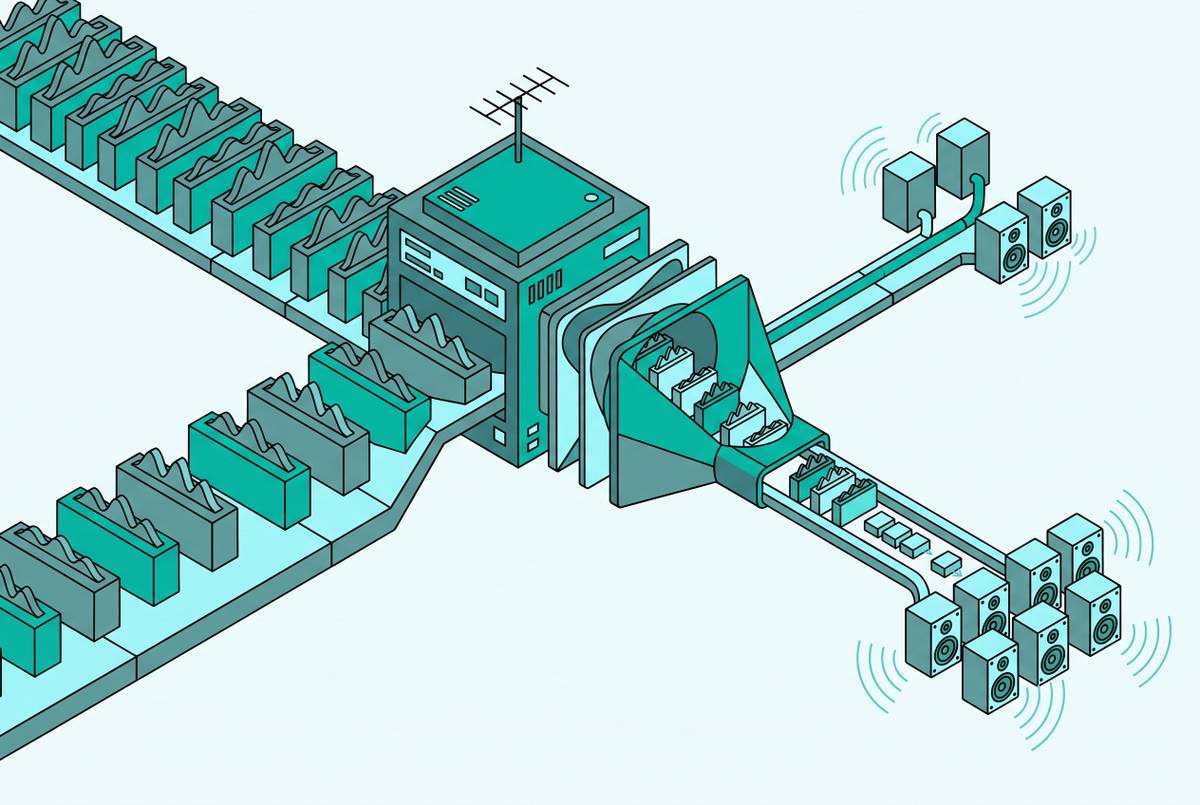
Batch synthesis needs the whole text to create all the audio, delivering it as a single, complete item. Streaming doesn't have that advantage. The audio kicks off while the text’s still coming in, leaving the system stuck halfway: some words spoken, others still loading, yet it all must sound smooth. Even if a vendor combines speech recognition, the language model, and TTS into a single API, the pipeline still runs, behind the scenes, as three separate stages with three different failure points. Pretend otherwise and a team ends up debugging a "TTS problem" that was actually a token expiring in the ASR layer three minutes earlier. That's an afternoon lost forever.
Two design types decide where problems occur, and here's the stance to take: chunk-level systems shouldn't be the go-to for conversational tasks. They break text at punctuation or word boundaries and generate each piece separately, so uneven rhythm and clunky shifts between parts aren't rare glitches. They're always present by design. Frame-level setups rely on neural Transducer models' real-time flow, swapping choppy chunk edges for their own kinds of glitches. Neither is perfect, but a fallback plan that uses both will still miss half its failures because they're fixing different problems.
A full-duplex voice agent's latency budget typically includes components such as network, audio chunking, ASR, NLU, LLM tool calls, and TTS's first audio frame. The total clocks in at about one second. If TTS streams, the caller perceives only the initial portion of the audio, as the remainder overlaps with ongoing playback. So, time-to-first-audio (TTFA) is the crucial metric, not time-to-first-byte (TTFB); a team focused on TTFB measures the wrong thing. Often those first bytes are only metadata, with no audio, letting teams brag about fast TTFB while the user hears nothing. ITU-T G.114, last revised in 2003 and still the standard reference, puts one-way delay below 150 ms in the "preferred" zone, 150 to 400 ms as acceptable but degraded, anything past 400 ms as increasingly problematic for user experience. Every fallback system must fit inside that window. If a recovery action adds a few hundred milliseconds, it’s not fixing the problem but just making the failure slower.
The failure modes that never appear in staging
Authentication and token expiry are the most dangerous issues in production because they're silent killers. Many providers give tokens that expire in 60 minutes or sooner. The connection starts strong, audio works, the dashboard shows green, then the token expires halfway through the call. The WebSocket closes with a generic code, no retries or fallbacks activate, and the caller hears only silence. Token refresh must be an ongoing process, not a one-time event at the start of a call that's forgotten 45 minutes later.
They break without giving any warning. On most platforms, exceeding an account's cloning limit doesn't trigger an API error. It simply switches to a default voice without warning. During a call with multiple personas, the caller might hear a new voice suddenly, and the logs won't show any reason. Someone has to catch it by hearing it, but that doesn’t work once you’re handling more than a few calls.
This silent treatment applies to SSML tags too, and it's perhaps worse given their inherent invisibility. The API usually takes <prosody rate="slow"> without error, but drops it when making the audio. The audio is returned at the default rate and pitch, and the mismatch is usually only caught when a QA listener notices the pacing is off. In IVR flows where pacing matters (like reading an account number slowly on purpose), that silent failure isn’t just cosmetic. The interaction's core purpose is silently defeated.
The provider usually isn't the cause of poor audio quality. It's often client-side audio context state corruption, quietly building up across long sessions like riverbed sediment. A provider change won’t help, just reset the audio context per session and refresh tokens early, so nothing stays stale.
RTF is crucial to avoiding buffer underrun. Streaming synthesis works only if generation is faster than playback. Once RTF exceeds 1.0 under load, the buffer empties, causing the caller to hear stutters. Imagine a network sending audio at about 11 KB/s, but the playback device (I2S in embedded systems) uses it at around 48 KB/s. Instead, the gap quickly empties the buffer, like pulling the plug from a filling bathtub. The usual solution is an adaptive ring buffer with set start, pause, and resume levels, but the same buffer underrun can happen right after sentence breaks if the PCM stream and AudioClip sample rates don’t match. Two causes, one effect.
Many providers drop WebSocket connections after 5 minutes without activity, so keepalive pings must be sent about every 30 seconds. Without keepalive pings, a stream may transcribe smoothly for a while, then abruptly stop without a close frame or error message. It stays hidden unless monitored, and since one stuck connection can block 50 calls behind it, a single zombie WebSocket is more than just a small problem. It's a ticking time bomb for the queue. Reusing one SpeechSynthesizer instance for all utterances also helps by avoiding repeated TCP, SSL, and WebSocket handshakes that create random latency spikes no one can figure out later.
Concurrency is its own animal, and it's the one that punishes success. Latency reaches around 800 ms at 100 concurrent streams when GPU resources saturate, which also worsens an underlying accuracy problem: streaming TTS gets 5 to 20 times less context than batch processing. Real-world traffic surges will break a system that breezes through light test loads, just like a Tuesday-only ramp buckles under holiday crowds. Latency benchmarks are typically run under ideal conditions with a single request and no contention, making the difference between P50 and P95 more telling than the top-line figure. For example, in the Gradium TTS Latency Benchmark 2026, P95 was just 16 ms higher than P50, showing a narrow range, though other providers in the same test showed much more variation.
Mispronunciations of entities crop up in peculiar, specific instances. The system reads phone numbers as one long string of digits, not grouped like people do, so "5551234567" is wrong instead of "555-123-4567." This is a text normalization issue, caused by streaming systems needing to group digits early, before seeing the full sentence.
Then there's outright hallucination, which sounds dramatic and, in a small number of cases, is exactly that. Evaluated systems produced 41 hallucinated samples for FireRedTTS-2, 24 for Higgs Audio V2, and 17 for VibeVoice 1.5B out of their respective test sets, ranging from invented words that don't exist in any language to looping sentences to audio that just turns to garble. It’s just a few bad outputs, until one hits during a customer’s payment. Streaming translation systems already have a detection method worth copying: Whisper's temperature fallback kicks in when the gzip compression ratio of its output tokens exceeds 2.4, because hallucinated or looping text compresses too easily. Use that compression-ratio trick to catch TTS hallucinations instead of creating a new method.
At its core, there's a deeper, systemic failure, architectural, not technical, that's the real cause for concern. Three different companies often own the voice model, inference engine, and delivery network. Three different weak spots, three sets of rules to follow, and no one to blame when everything crashes. Staging never catches short-lived tokens, WebSocket dropouts, or playback buffer glitches. They appear with live traffic and no error message, which is pretty rude.
What a real provider outage costs when there is no fallback
April 20, 2026. The team managing a voice AI agent at a mid-market insurance company gets a pager alert. Calls fail 40% of the time, due to three words on Anthropic's status page: "Investigating API Issues." The outage lasts 6 hours. With no failover in place, each call that reached the agent during the outage returned an error, and 1,200 customer interactions were completely lost by the time service resumed.
It's not uncommon. Just math, and it's rather unforgiving. Anthropic’s 90-day uptime is 99.5%, meaning about 44 hours of downtime yearly. If you run a voice pipeline without a TTS fallback, a single provider outage means the entire product stops working. A phone call doesn't allow for partial success. Either the voice plays, or the call goes silent and the customer ends it.
Here's the key difference teams often miss: issues in the last section (zombie connections, expired tokens, buffer underruns) can be fixed locally. A watchdog spots it, a reset clears it, a retry hides it. They’re a whole other problem, since you can’t fix them yourself. It's beyond the team's control, upstream, and unaffected by local monitoring. Thinking a provider outage is just a local failure that a retry loop can fix is the error that made the insurance company’s tough night a 1,200-call crisis instead of a small problem. The next section exists because understanding local failures, while essential, isn't enough. To handle a full outage, you need a different approach, focused on activation rather than mere recovery.
How fallback triggering works before a recovery action can fire
Fallback triggering isn't one decision. Seeing it as just a simple on-off switch leads systems to hide problems rather than fix them, and that’s the opposite of what’s needed here. Research from Schneider et al. at TU Munich (the VoxFallbacks work, built on 3,030 anonymized naturally occurring fallback-triggering utterances collected from more than 500 users over 6 months) identifies several genuinely distinct causes hiding behind what looks, from the outside, like the same symptom: noisy audio input producing transcription errors, utterances that are ambiguous or incomplete, unintended activations where the system was never meant to respond at all, requests that were ambiguous or incomplete, or unintended activations where the system was never meant to respond.
Most breakdowns happen right there, and we should pause to think about it. If the request can be fixed, a generic fallback reply ("Sorry, I didn't catch that") doesn’t solve the problem. It masks an issue that could be solved with a courteous but unhelpful message. Identifying the root cause decides if the best recovery is retrying, reprompting, escalating to a person, or another approach, and a wrong guess compounds the initial issue.
Unintended activation needs special attention since the right fix is surprisingly easy: just ignore it. Not stopping a response to a false activation causes disruptive behavior, and that disruption has been linked to users leaving. In this specific instance, inaction is the solution, not the problem, going against most engineers' urge to always react.
Teams often get this part backwards: lightweight embedding-based classifiers usually work better than bigger generative models for most fallback classification tasks, and use far less computing power. Using a large generative model here doesn't make sense and isn't even close. In a pipeline where latency matters and the ITU-T G.114 tolerance window is already tight, a detection layer taking hundreds of milliseconds is counterproductive, regardless of its accuracy. Whether correct but slow or wrong but fast, both answers fail the caller, though at different moments.
TTS detection relies on several specific mechanisms working in tandem. A watchdog-and-failover system that spots silent WebSocket streams that never send a close frame. A compression-ratio threshold (2.4, in one published implementation) acts as a hallucination trigger. A breaker trips when errors hit the set limit, stops sending calls, then tests the waters before going full speed again. And health checks that confirm it's actually connected, not just that a process is running. A pod might say it’s healthy even when its audio pipeline has completely stopped, and that difference between "running" and "working" is what "ready" checks are designed to fix.
Recovery patterns mapped to the failure modes they address
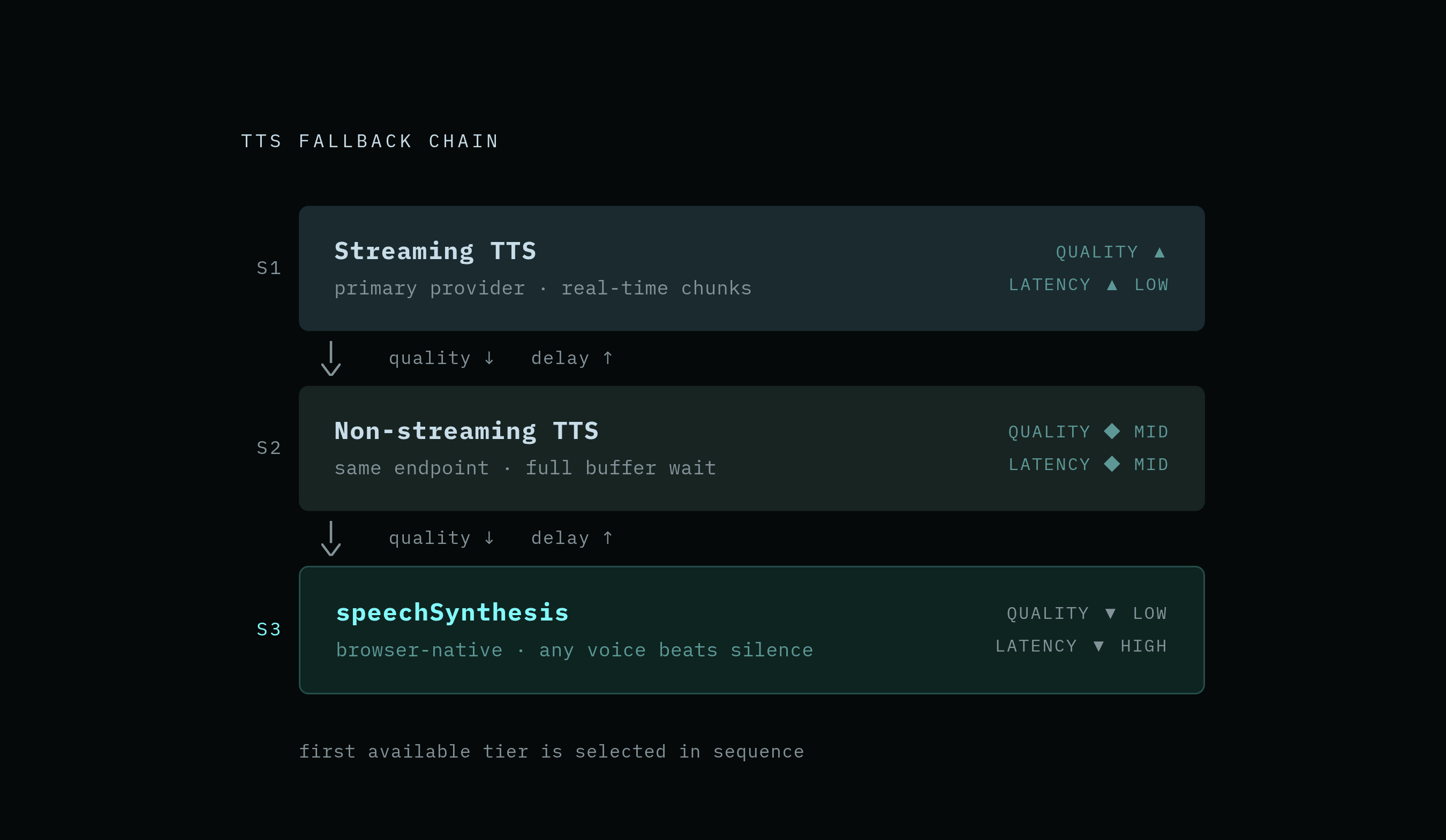
Dual-provider active-passive fallback is the bare minimum, not the ultimate goal, and relying solely on it is a clear error that needs to be called out. Still, it's the bare minimum setup that makes sense. Each AI component in the stack (ASR, LLM, TTS) has a backup provider ready on standby. Primary handles all traffic, standby takes over when it fails. It's easy to understand, and it specifically handles the same situation that caused the April 20 outage: a single provider failing with no backup.
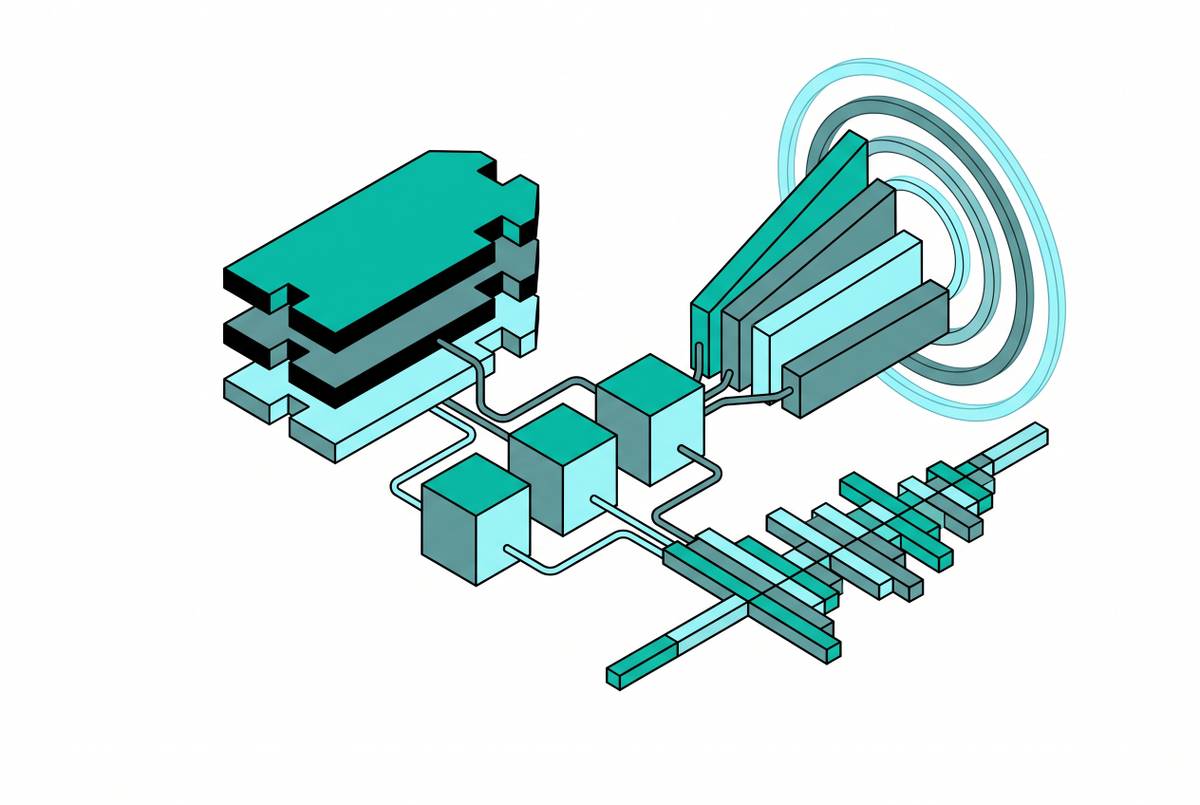
A three-tier fallback chain does more: it degrades gracefully instead of just failing once and hoping for the best. While it requires more initial setup than a single standby, this pattern is the one worth pursuing. A research system describes a three-tier fallback chain for TTS: tier S2 for non-streaming TTS via the same endpoint, and tier S3 for browser-native speechSynthesis. During operation, the system selects the first available source, keeping synchronization logic independent of provider details. Audio quality gets worse and delays increase as you go down the chain, but the caller still hears something rather than nothing. The chain exists to provide something degraded rather than nothing. It's the design choice that beats any single-provider setup, regardless of that provider's claimed reliability.
They keep a single crash from taking down fifty others. They monitor error rates on external services, and when errors exceed a set limit, they stop sending requests to the failing service and switch straight to fallback, then send occasional test requests during recovery to see if the service is back before resuming normal traffic. A useful method in production: using a circuit breaker pattern, so if the primary provider fails, requests are routed to a backup that handles recovery gracefully. This fixes the earlier concurrency-cascade issue, where one stuck connection could hold up 50 concurrent calls, like cars stuck behind a broken-down truck.
Backpressure management tackles the underrun issue from the generation side, not the playback side. When TTS lags the LLM's output, the solution queues text and slows the LLM stream to match, instead of letting the buffer empty as the LLM creates unvoiceable tokens. It works in real-world systems when RTF goes over 1.0, and it’s better than just adding buffer space and crossing your fingers.
It's the adaptive ring buffer that complements that fix on the playback side. Thresholds for starting, pausing, and resuming prevent the buffer from completely draining during rate mismatches, crucial when delivery is 11 KB/s versus playback's 48 KB/s, or when a sample-rate mismatch occurs only at a sentence boundary.
Session audio resets and proactive token renewal finish the list, fixing the corruption and expiry issues mentioned before. Again, token refresh should be part of the initial design, not just an add-on once the first mid-call disconnect highlights its absence. Reusing one pre-connected SpeechSynthesizer for all utterances avoids the repeated handshake costs (TCP, SSL, WebSocket) that cause random, unexplained latency spikes in systems that seem fine, until they suddenly aren’t.